


Why Water Leaks Are More Dangerous Than You Think
Water leaks do not announce themselves with sirens or flashing lights. They hide behind walls, drip silently under sinks, and seep slowly through supply lines for weeks or months before anyone notices. By the time visible damage appears, the problem has usually grown far beyond what a simple repair can address.
According to the U.S. Environmental Protection Agency WaterSense program, household leaks waste nearly 1 trillion gallons of water nationwide every year. The average home loses more than 9,300 gallons annually to leaks alone. Nine percent of homes have leaks wasting 50 or more gallons every single day. That water does not just disappear. It soaks into flooring, feeds mold colonies, rots structural materials, and runs up utility bills month after month without a single visible sign.
In Tucson, water waste carries extra weight. The desert Southwest faces persistent drought conditions, and every gallon matters in a region where long-term water availability is a genuine concern. Smart plumbing systems address both the financial and environmental sides of that problem at the same time.
What Is a Smart Plumbing System?
A smart plumbing system uses sensors, monitors, and connected technology to track water behavior inside your home in real time. It watches for pressure changes, detects moisture where it should not exist, monitors flow patterns, and alerts you the moment something looks wrong. The most advanced systems go one step further and automatically shut off your water supply before damage can spread.
Think of it as a security system for your pipes. Just as a smart smoke detector does not wait for a fire to fully develop before sounding the alarm, a smart plumbing system does not wait for a puddle to form or a ceiling to stain before taking action. It catches problems at the earliest possible stage, when fixes are still simple and inexpensive.
Smart plumbing systems fit both new construction and existing homes. A licensed plumber can integrate these devices into your current plumbing infrastructure without major renovations. That accessibility makes them practical for any Tucson homeowner or business owner who wants real protection rather than just hoping a leak never strikes.
How Smart Leak Detection Technology Works
Different smart leak detection devices use different methods to monitor your plumbing. The technology ranges from simple contact-based moisture detection to sophisticated pressure analysis powered by machine learning.
- Moisture sensors detect the presence of water using electrical conductivity. When water bridges the sensor probes, the circuit closes, the device triggers an alarm, and a notification reaches your phone immediately.
- Flow-based monitors install on the main water line and measure how water moves through your pipes. Any deviation from normal patterns, whether a continuous trickle signaling a running toilet or a sudden pressure drop signaling a burst pipe, triggers an alert.
- Pressure wave analysis systems sample water pressure hundreds of times per second. Phyn, for example, analyzes 240 pressure readings per second using machine learning trained on hundreds of millions of real-world water events. It identifies the specific pressure signature of every fixture in your home and detects pinhole leaks, drip leaks, burst pipes, and frozen pipe conditions while distinguishing them from normal use to minimize false alerts.
All of these systems connect to your home Wi-Fi and communicate through a smartphone app. You receive real-time alerts wherever you are, and many systems let you shut off the water remotely with a single tap when you cannot get home immediately.
Types of Smart Leak Detection Devices for Homes and Businesses
The smart plumbing market offers a range of device types at different price points and capability levels. Understanding the differences helps you choose the right protection strategy for your property.
Point-of-Use Moisture Sensors
Point-of-use moisture sensors are the most affordable entry point into smart plumbing protection. These compact devices sit on the floor or attach near individual fixtures: under the kitchen sink, behind the toilet, next to the water heater, in the laundry room, or anywhere that water pooling would signal a problem.
When the sensor detects moisture, it sends an immediate alert to your phone via the connected app. Some models integrate with smart home platforms like Amazon Alexa, Google Home, or Apple HomeKit, triggering additional automations. Basic models cost under $50. Multi-sensor systems with a central hub run between $100 and $300.
These sensors work well as a first layer of protection for specific high-risk areas. Their limitation is that they only detect leaks after water has physically reached the sensor location. They do not catch hidden leaks inside walls, ceiling cavities, or underground supply lines.
Whole-Home Flow Monitors and Automatic Shutoff Valves
Whole-home flow monitors install directly on the main water supply line, typically near where it enters the home. They measure every gallon that passes through and build a baseline profile of your normal water usage over time. When the system detects flow outside that profile, whether a running toilet wasting hundreds of gallons or a burst pipe releasing water at high volume, it sends an alert and, on systems with automatic shutoff, closes the main valve immediately.
Moen Flo and Phyn Plus are among the most well-known products in this category. Both install on the main line, connect to smartphone apps, perform daily plumbing health checks, and offer automatic shutoff. Installation requires a licensed plumber. Device costs typically range from $250 to $700 plus professional installation labor.
The National Association of Home Builders highlights whole-home systems as the most comprehensive smart water protection available for residential properties. A single device on the main line protects every fixture and every pipe in the system simultaneously.
Pressure Wave Analysis Systems
The most advanced smart water monitoring systems use pressure wave analysis and machine learning to identify leak signatures at a granular level. These devices analyze the precise pressure patterns each individual fixture creates and compare real-time readings to learned baselines.
A dripping faucet creates a different pressure signature than a running toilet. A burst pipe differs from a normal shower cycle. The system learns your specific home, alerts you only when something genuinely abnormal appears, and dramatically reduces false alarms. Pilot testing across more than 300 homes showed these systems successfully identifying leak issues in 10% of all properties tested.
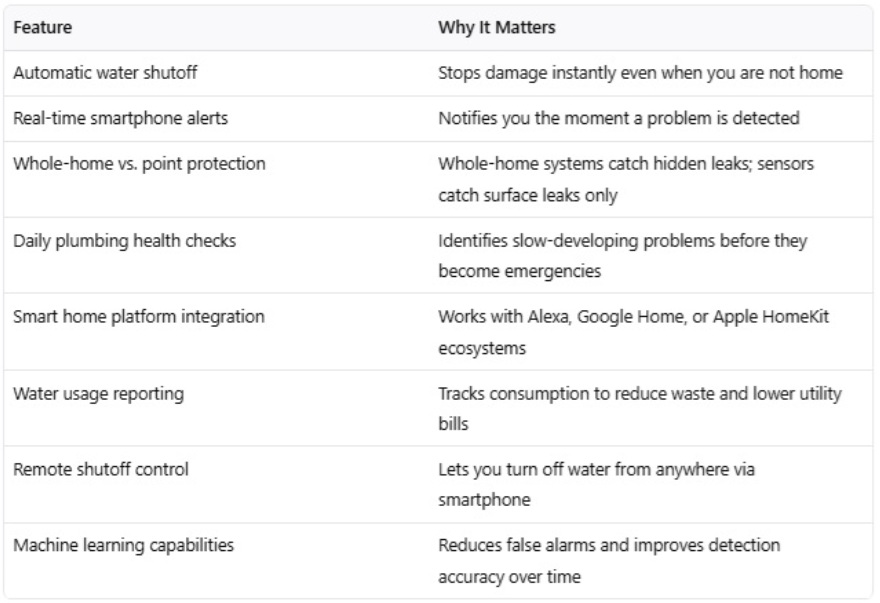
Key Features to Look for in a Smart Leak Detection System
Not all smart plumbing products deliver equal protection. When evaluating options for your Tucson home or business, compare these critical features before committing to a purchase.
How Smart Leak Detection Protects Your Tucson Home Specifically
Tucson presents a specific set of plumbing challenges that make smart leak detection especially valuable for local homeowners and businesses.
The city carries a significant amount of older housing stock. Properties built more than 30 years ago face substantially elevated risk of plumbing supply and drainage failures due to pipe material degradation. In a desert climate where soil conditions fluctuate with monsoon season moisture and extreme summer heat, underground pipes face additional stress from ground movement and thermal expansion that gradually weakens joints and connections.
Seasonal temperature swings create another unique vulnerability. Tucson winters can drop below freezing overnight despite the generally warm climate. Pipes in exposed or poorly insulated areas face freeze-thaw stress that weakens fittings over time. A whole-home smart monitor catches the pressure anomaly created by a freezing pipe before it bursts and floods a room.
Water conservation is also a priority in Tucson. The city and the Arizona Department of Environmental Quality both support water efficiency measures. A smart flow monitor catches silent leaks that waste hundreds of gallons weekly without any visible sign, supporting Tucson Water conservation goals while protecting your wallet at the same time.
Smart Plumbing and Potential Home Insurance Benefits
Some homeowners insurance carriers offer premium discounts for properties equipped with certified smart leak detection systems. Because water damage represents approximately 24% of all U.S. homeowners insurance claims, insurers have clear financial motivation to reward proactive prevention. Contact your provider to ask whether your specific system installation qualifies for a discount or endorsement.
Even without a formal discount, the risk reduction carries its own long-term value. A single avoided water damage claim of $10,849 more than pays for the cost of a whole-home monitoring system many times over. That math is straightforward and impossible to argue with.
Installing Smart Plumbing Systems: What the Process Looks Like
Installing smart plumbing devices ranges from extremely simple to professionally complex depending on the device type and the level of coverage you want.
Point-of-Use Sensor Installation
Individual moisture sensors require no plumbing work at all. You place them near a risk area, connect them to your home Wi-Fi through a smartphone app, and setup is complete within minutes. No tools, no pipe cutting, no professional required. These sensors suit renters, homeowners starting with basic protection, or businesses wanting low-cost monitoring in specific locations like server rooms, storage areas, or commercial restrooms.
Whole-Home System Installation
Whole-home flow monitors and automatic shutoff systems require professional installation by a licensed plumber. The process involves cutting into the main water supply line, fitting the device into the line with proper connections, connecting it to power, and configuring it through the manufacturer app. A qualified plumber ensures the installation meets local code requirements, maintains proper pipe sizing, and does not compromise existing system integrity.
Installation typically takes two to four hours for a standard residential property. Commercial properties with larger pipe diameters or multiple supply lines may require additional time and hardware. Professional installation ensures proper calibration so the system detects real leaks without triggering false shutoffs that disrupt your water supply unnecessarily.
The Future of Smart Plumbing Technology
Smart plumbing technology is advancing fast. The next generation of systems moves beyond leak detection into full home water intelligence. Upcoming capabilities include predictive maintenance alerts that flag aging pipe sections before failure, AI-driven water budgeting that recommends conservation measures based on local drought conditions, and full integration with smart home ecosystems that adjust irrigation schedules, appliances, and water heater settings based on real-time supply data.
For Tucson homeowners, that future is relevant today. The city continues expanding its smart water infrastructure, and residents who install smart plumbing systems now position themselves well ahead of the curve on both water conservation and home protection. The technology monitoring a bathroom fixture today will manage entire building plumbing systems tomorrow. Getting started now means your system learns your home’s water patterns sooner and protects you more accurately over time.
Frequently Asked Questions About Smart Plumbing and Leak Detection
What is a smart plumbing system?
A smart plumbing system uses connected sensors, monitors, and shutoff devices to track water behavior inside your home in real time. It detects leaks, abnormal flow patterns, and pressure changes, sends alerts to your smartphone, and in advanced configurations, automatically shuts off the water supply to prevent damage. Smart plumbing systems protect both the structure of your home and your utility bill simultaneously.
How does a smart water leak detector work?
Smart water leak detectors use one of several technologies. Electrical conductivity sensors detect moisture on surfaces. Flow monitors measure water movement through pipes and flag anomalies in usage patterns. Pressure wave systems sample pipe pressure hundreds of times per second and use machine learning to identify unique leak signatures. All of these systems connect to Wi-Fi and send real-time alerts to your phone when a problem is detected.
How much does smart leak detection cost?
Basic point-of-use moisture sensors cost $20 to $100 each. Multi-sensor systems with a central hub run $100 to $300. Whole-home flow monitors with automatic shutoff, such as Moen Flo or Phyn Plus, cost $250 to $700 for the device plus professional installation labor. That total investment is a fraction of the average water damage insurance claim of $10,849.
Can smart plumbing systems detect hidden leaks inside walls?
Yes. Flow-based monitors and pressure wave analysis systems detect hidden leaks that produce no visible surface water. They identify the continuous micro-flow or pressure anomaly that a hidden pipe leak creates and alert you before visible damage appears. Point-of-use moisture sensors alone cannot detect hidden leaks because they require direct physical water contact to trigger.
Do smart leak detectors automatically shut off the water?
Not all of them. Basic moisture sensors send alerts only. Whole-home flow monitors with integrated shutoff valves, such as Moen Flo and Phyn Plus, close the main supply valve automatically when a serious leak is detected. This feature is one of the most important capabilities to look for because it protects your home even when you are away and cannot respond to an alert in time.
Does smart leak detection lower my homeowners insurance?
Some insurance carriers offer discounts for homes equipped with certified smart water leak detection systems. Because water damage accounts for approximately 24% of all homeowners insurance claims, insurers benefit when homeowners take proactive steps to reduce that risk. Ask your specific carrier whether your installation qualifies for a reduction in your premium.
Where should I install moisture sensors in my home?
Place sensors in the highest-risk areas first: under kitchen and bathroom sinks, behind the toilet, next to the water heater, in the laundry room near the washing machine, in the basement or crawlspace, and near any HVAC equipment with condensate drain lines. In Tucson, also consider areas near outdoor hose connections tied to irrigation systems.
Can a smart water monitor reduce my water bill?
Yes. Smart flow monitors track every gallon passing through your main water line and alert you to continuous drips, running toilets, and other silent leaks that inflate your bill without visible signs. The EPA estimates that fixing common household leaks saves homeowners approximately 10% on their water bills. A smart monitor finds those leaks faster than any manual inspection ever could.
Do smart plumbing systems work with older homes?
Yes. Smart leak detectors and whole-home monitors are installed in existing homes regardless of age. Older homes actually benefit most from smart monitoring because aging pipes carry higher leak risk. A licensed plumber can assess your current plumbing infrastructure and recommend the right system for your specific setup and budget.
Do I need a plumber to install a smart leak detection system?
Point-of-use moisture sensors do not require a plumber. Whole-home flow monitors and automatic shutoff valves require a licensed plumber to cut into the main supply line and install the device correctly. Professional installation ensures proper pipe sizing, local code compliance, and accurate system calibration so you get real leak detection without the false shutoffs that frustrate homeowners with improperly installed systems.
Call Code Blue Plumbing for Smart Plumbing Installation in Tucson, AZ
A leak you cannot see today can become a $10,000 repair tomorrow. Smart leak detection technology closes that gap and gives you real-time protection around the clock, whether you are home or halfway across the country.
Code Blue Plumbing is an experienced plumbing company that handles all sorts of residential and commercial plumbing issues in the Tucson, AZ area. With over 20 years of expertise and a reputation as the number one rated plumber in Tucson, the team installs and integrates smart water monitoring systems, whole-home shutoff valves, and leak detection devices for homes and businesses throughout the region. Flat-rate pricing, 24/7 availability, and licensed technicians on every job mean you get a system that performs correctly from day one.
Stop hoping a leak will not happen and start knowing the moment it does. Contact Code Blue Plumbing or call (520) 297-9949 to schedule your smart plumbing consultation today.