


What Is Greywater? Understanding the Basics
Every day, water flows down your shower drain, out of your bathroom sink, and through your washing machine. Most of it disappears into the sewer system, treated as waste. But it is not a waste. Most of it is greywater, and in a desert city like Tucson, letting it vanish without a second thought is one of the most expensive habits a homeowner can have.
Greywater is gently used household water collected from bathtubs, showers, bathroom sinks, and clothes washers. It has not come into contact with toilet waste, raw meat, or heavily contaminated materials. That distinction matters because it means greywater can be safely redirected and reused for specific purposes, most commonly outdoor irrigation, without expensive treatment or heavy filtration.
According to the University of Arizona Water Resources Research Center, greywater could account for as much as 27% of total water usage in a single-family home. A family of four generates more than 100 gallons of potential greywater every single day. In Tucson, where the average resident uses 95 gallons of potable water daily, capturing and reusing even a fraction of that greywater creates real, measurable savings on every utility bill.
Greywater vs. Blackwater: What Is the Difference?
The distinction between greywater and blackwater is essential to understanding what you can and cannot do with reused household water.
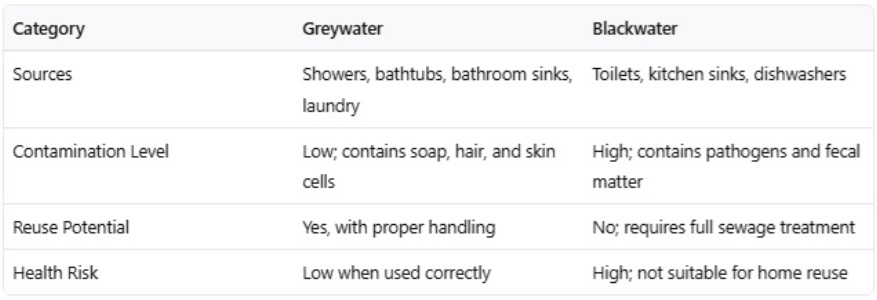
Kitchen sink water, dishwasher discharge, and all toilet waste qualify as blackwater because they carry high concentrations of pathogens, grease, and food material. These sources must go through municipal sewage treatment and should never enter a greywater system under any circumstances.
How Much Water Can a Greywater System Save in Tucson?
Tucson sits in the Sonoran Desert. Water is not just a utility here. It is a resource that demands respect and careful management. The city has invested heavily in conservation programs precisely because long-term water availability depends on how responsibly residents and businesses use what they have.
The numbers make a compelling case for greywater reuse. Substituting greywater for potable water in outdoor irrigation reduces household water usage by an estimated 21 gallons per capita per day, according to the University of Arizona. For a household of four, that adds up to roughly 30,000 gallons of potable water saved every year. More advanced systems push annual savings toward 40,000 gallons.
The U.S. Environmental Protection Agency reports that 48 U.S. states experienced drought conditions in 2024. Arizona faces consistent water supply challenges driven by climate shifts, population growth, and Colorado River allocation reductions. Installing a greywater system is not just an environmental statement. It is a practical response to the water reality of living in the desert Southwest.
Lower utility bills follow naturally from reduced potable water use. Outdoor irrigation accounts for a major share of residential water consumption in Tucson, especially during the long, hot summer months. Diverting greywater to the landscape instead of drawing fresh water from the municipal supply reduces your bill every single month the system runs.
How Does a Greywater System Work?
A greywater system intercepts water from qualifying household fixtures before it enters the sewer line. It routes that water through a diverter valve, through filtration if required, and out to an irrigation area or secondary application. The level of complexity depends entirely on the system type and how many fixtures you include.
Simple systems use gravity to move water from the source to the landscape without any pump, storage tank, or complex filtration beyond a basic screen to catch hair and lint. These systems are affordable, low-maintenance, and well-suited for the most common residential greywater application: laundry water directed to trees or shrubs in the yard.
More advanced systems add pumps, surge tanks, filtration stages, and automated controls. They handle larger volumes, serve more fixtures, and allow precise distribution across a larger landscape area. Commercial properties and multi-family buildings in Tucson typically benefit from these more capable configurations.
Key Components of a Greywater System
- Diverter valve: Redirects water from the drain line to the greywater system instead of the sewer
- Pre-filter or hair catcher: Removes lint, hair, and debris before water moves through the system
- Surge tank (advanced systems): Temporarily holds water to manage flow and prevent overloading the irrigation area
- Distribution lines: Deliver water to mulched basins or drip irrigation zones in the landscape
- Pump (advanced systems): Moves water when gravity alone cannot carry it to the intended area
- Backflow preventer: Required by the City of Tucson for any pressurized system that uses a pump
Types of Greywater Systems for Homes and Businesses
Not every greywater system fits every property. The right choice depends on your household size, landscape layout, water usage patterns, budget, and local regulations. Here is a breakdown of the three main types used in residential and commercial settings across Tucson.
Laundry-to-Landscape Systems
The laundry-to-landscape system is the most popular and most accessible starting point for greywater reuse. It connects the washing machine drain directly to a gravity-fed distribution line that routes water to trees, shrubs, or other established plantings in the yard. No pump, no storage tank, and no complex filtration required. Just a diverter valve, a filter, and properly positioned mulched basins.
In Arizona, this system typically requires no permit when installed without modifying existing drain plumbing. The City of Tucson recognizes it as a qualifying system for the greywater rebate program. Installation costs range from $800 to $2,000 for a basic setup, making it the most affordable entry point into greywater reuse for Tucson homeowners.
One important consideration: use only laundry loads that do not involve diapers, heavily soiled clothing, or bleach. Use biodegradable, phosphate-free, and boron-free laundry detergent to protect both soil health and plant life long-term.
Branched Drain Systems
A branched drain system taps into shower, bathtub, and bathroom sink drains, then uses gravity to distribute collected water across multiple outlets in the landscape. The system splits into branches, with each branch serving a separate planting zone. No pump is needed as long as the landscape sits below the drain source and adequate slope exists.
Branched drain systems work exceptionally well on sloped lots, which are common in the foothills and hillside neighborhoods throughout Tucson. They handle higher daily water volumes than a laundry-only system and serve more plants without increasing operating costs. They do require careful planning and proper pipe sloping to perform correctly.
Pumped and Filtered Systems
Pumped and filtered systems represent the most capable and most complex greywater configurations available for residential and commercial properties. They collect water from multiple sources, run it through multi-stage filtration, store it in a tank, and distribute it through drip irrigation lines using an automated pump. Some advanced systems meet NSF/ANSI Standard 350 certification, which makes them eligible for indoor toilet flushing under Arizona law.
Installation costs for these systems range from $5,000 to $20,000 depending on scale and complexity. Commercial properties, multi-family residential buildings, and homeowners seeking maximum water savings benefit most from this investment level. A licensed plumber should handle all installation and plumbing integration work on these systems.
What Can and Cannot Go Into a Greywater System
Knowing what water qualifies as greywater and what products are safe to use directly impacts the safety of people, plants, and soil. Arizona law defines greywater specifically, and that definition guides what enters the system and what stays out.
Safe Greywater Sources
- Bathroom sinks: Handwashing water from bathroom basins only (not kitchen sinks)
- Showers and bathtubs: Water used for bathing, free of harsh chemical treatments
- Clothes washer: Rinse and wash water from standard laundry loads, excluding heavily soiled or bleach loads
Use these plant-safe product types with your greywater system:
- Biodegradable, phosphate-free laundry detergents
- Boron-free soap and shampoo products
- Chlorine-free personal care products
- Liquid detergents preferred over powdered varieties
Sources to Keep Out of Your Greywater System
- Kitchen sink water: Contains grease, food particles, and bacteria at levels too high for safe reuse
- Dishwasher discharge: High-temperature water with harsh chemical detergents damages soil biology
- Toilet water (blackwater): Contains pathogens and must go through full sewage treatment
- Heavily soiled laundry loads: Contamination risk too high for safe outdoor application
- Water containing bleach, disinfectants, or solvents: Harmful to soil health and plant life
Arizona Greywater Laws: What Tucson Homeowners Need to Know
Arizona is one of the most greywater-friendly states in the country. The state shifted from a restrictive hard-permitting system in 2001 to a practical soft-permitting approach that encourages residential reuse without lengthy application processes for simple systems.
Under Arizona Revised Statutes Section 49-204, residential greywater systems used for outdoor irrigation can operate without a permit as long as best management practices are followed. Systems used for indoor toilet flushing must meet NSF/ANSI Standard 350 certification and stay under 400 gallons per day. Cities, towns, and counties cannot restrict greywater use beyond the state framework in most circumstances.
For outdoor irrigation, key requirements include: keeping greywater on your own property, preventing pooling or runoff, applying water below the surface or into mulched basins rather than spraying it, and avoiding direct contact with edible crops. A properly installed system handles all of these requirements automatically and without daily management from the homeowner.
City of Tucson Greywater Rebate Program
The City of Tucson goes further than most cities in supporting greywater adoption. Through its Gray Water System Rebate Program, residential Tucson Water customers can receive a rebate covering 50% of qualifying installation costs up to $1,000.
To qualify for the rebate:
- Must be a single-family residential Tucson Water customer
- Must attend the free mandatory Gray Water Rebate Workshop before installation begins
- Must submit a project plan with the application
- Must provide itemized receipts or invoices for materials and contracted services
- Must submit the application within one year of purchasing materials
Hoses, bathroom remodel materials, plants, and sales taxes do not qualify. Permanent installed systems drawing from clothes washers, bathtubs, showers, or bathroom sinks do qualify. If the system uses a pressurized pump, a Reduced Pressure Assembly for backflow prevention is required and counts toward qualifying installation costs.
How to Use Greywater Safely in Your Yard
Greywater applied correctly benefits your landscape and protects public health at the same time. Applied carelessly, it creates odor problems, attracts insects, and exposes people to pathogens. The difference comes entirely down to how you distribute it and what you water.
Best Practices for Greywater Irrigation
- Apply to mulched basins so water soaks into soil and avoids pooling on the surface
- Water trees, shrubs, and ornamental plants rather than edible crops or lawns where contact is more likely
- Avoid spraying greywater in any form that creates airborne droplets or runoff onto neighboring property
- Keep children and pets away from freshly irrigated areas until water has fully absorbed into the soil
- Do not store greywater for more than 24 hours as bacterial growth accelerates rapidly in standing water
- Avoid acid-loving plants like certain citrus varieties and sensitive succulents that react poorly to soap content
Maintaining Your Greywater System
A greywater system is not a set-it-and-forget-it installation. Routine maintenance keeps it functioning correctly, prevents odors, and protects your landscape and household from health risks. The good news is that a well-installed system does not demand intensive upkeep.
- Monthly: Clean pre-filters and hair catchers to prevent clogs and buildup
- Every 3 to 6 months: Check distribution lines for clogs, leaks, or root intrusion
- Every 6 to 12 months: Flush surge tanks and inspect pump performance on active systems
- Annually: Test soil pH and health in irrigated areas; adjust plant selection if needed
- As needed: Switch the diverter valve to sewer mode when using bleach or harsh cleaning products
Tucson summers bring intense heat that accelerates bacterial activity in standing water. Use the system actively during the growing season and switch to sewer mode during extended periods of non-irrigation to prevent stagnant water buildup in any storage components.
Frequently Asked Questions About Greywater Systems
What is a greywater system in simple terms?
A greywater system collects gently used household water from showers, bathtubs, bathroom sinks, and clothes washers. Instead of sending that water directly to the sewer, it routes it to outdoor irrigation or other approved uses. In Tucson, it is one of the most practical ways to reduce potable water consumption and lower your monthly utility bill at the same time.
Is greywater legal in Tucson, AZ?
Yes. Arizona is one of the most permissive states for residential greywater reuse. Under Arizona Revised Statutes Section 49-204, simple outdoor greywater irrigation systems do not require a permit as long as best management practices are followed. The City of Tucson also actively supports greywater adoption through its rebate program.
How much water can a greywater system save?
A properly installed greywater system saves between 30,000 and 40,000 gallons of potable water per year for an average household. The University of Arizona estimates that substituting greywater for outdoor irrigation reduces household water use by 21 gallons per capita per day. For a family of four, that exceeds 30,000 gallons annually.
What can greywater be used for?
In Arizona, greywater is approved for outdoor landscape irrigation and, with a certified NSF/ANSI Standard 350 system, for indoor toilet flushing. Apply it below the soil surface or to mulched basins and use it on non-edible plants to minimize any health risk from soap or bacterial content.
Can I use greywater on a vegetable garden?
Not directly. Greywater should not be applied to edible parts of food plants or any surface that food contacts. It is acceptable to use on trees with edible fruit if the water never touches the fruit itself. For vegetable gardens, keep greywater directed at the root zone well away from leaves, stems, and soil that touches food crops.
Does a greywater system need a permit in Arizona?
Simple laundry-to-landscape systems that tap into a pre-existing drain stub-out without modifying internal plumbing typically do not require a permit in Arizona. Any system that modifies internal drain lines, uses a pressurized pump, or qualifies for the City of Tucson rebate may require a permit or inspection. A licensed plumber can clarify exactly what your specific setup requires.
What detergents are safe for a greywater system?
Use biodegradable, phosphate-free, and boron-free laundry and personal care products. Chlorine bleach, synthetic fragrances, and harsh chemical cleaners harm soil biology and plant health. Liquid detergents generally outperform powdered options in greywater systems because they dissolve completely and leave less residue in pipes and distribution lines.
How long does a greywater system last?
A well-maintained gravity-based greywater system lasts 15 to 25 years. Pumps and mechanical components in advanced systems typically need replacement every 5 to 10 years depending on use and water quality. Regular filter cleaning and routine system checks extend the lifespan of every component significantly.
Does the City of Tucson offer rebates for greywater systems?
Yes. The City of Tucson offers a rebate of 50% of qualifying installation costs up to $1,000 for single-family residential Tucson Water customers. Eligible systems include permanent greywater irrigation systems drawing from clothes washers, bathtubs, showers, and bathroom sinks. Attendance at the mandatory free Gray Water Rebate Workshop is required before installation.
Do I need a plumber to install a greywater system?
Simple laundry-to-landscape systems without plumbing modifications can be DIY-installed. Any system that requires cutting into existing drain lines, installing diverter valves inside the home, adding a pressurized pump, or connecting to indoor toilet plumbing should be handled by a licensed plumber. Professional installation ensures code compliance, proper backflow protection, and a system that performs correctly from the very first day.
Call Code Blue Plumbing for Greywater System Installation in Tucson, AZ
Water conservation in Tucson is not optional. It is part of living responsibly in a desert climate. A greywater system is one of the most direct, cost-effective ways to reduce your dependence on potable water, lower your monthly bill, and keep your landscape thriving through every season.
Code Blue Plumbing is an experienced plumbing company that handles all sorts of residential and commercial plumbing issues in the Tucson, AZ area. With over 20 years of expertise and a reputation as the number one rated plumber in Tucson, the team designs, installs, and services greywater systems for homes and businesses throughout the region. From simple laundry-to-landscape setups to full pumped and filtered systems, Code Blue Plumbing delivers the right solution for your property, your budget, and your water goals. Flat-rate pricing, 24/7 availability, and licensed technicians on every job mean no surprises and no shortcuts.
Ready to start saving water today? Contact Code Blue Plumbing or call (520) 297-9949 to schedule your greywater system consultation.